Agricultural Metal Roofs
Barn and farm-building roofs whose panels are sound but whose surface has weathered, with seams and fasteners that benefit from a sealing coat.
Roof Coatings
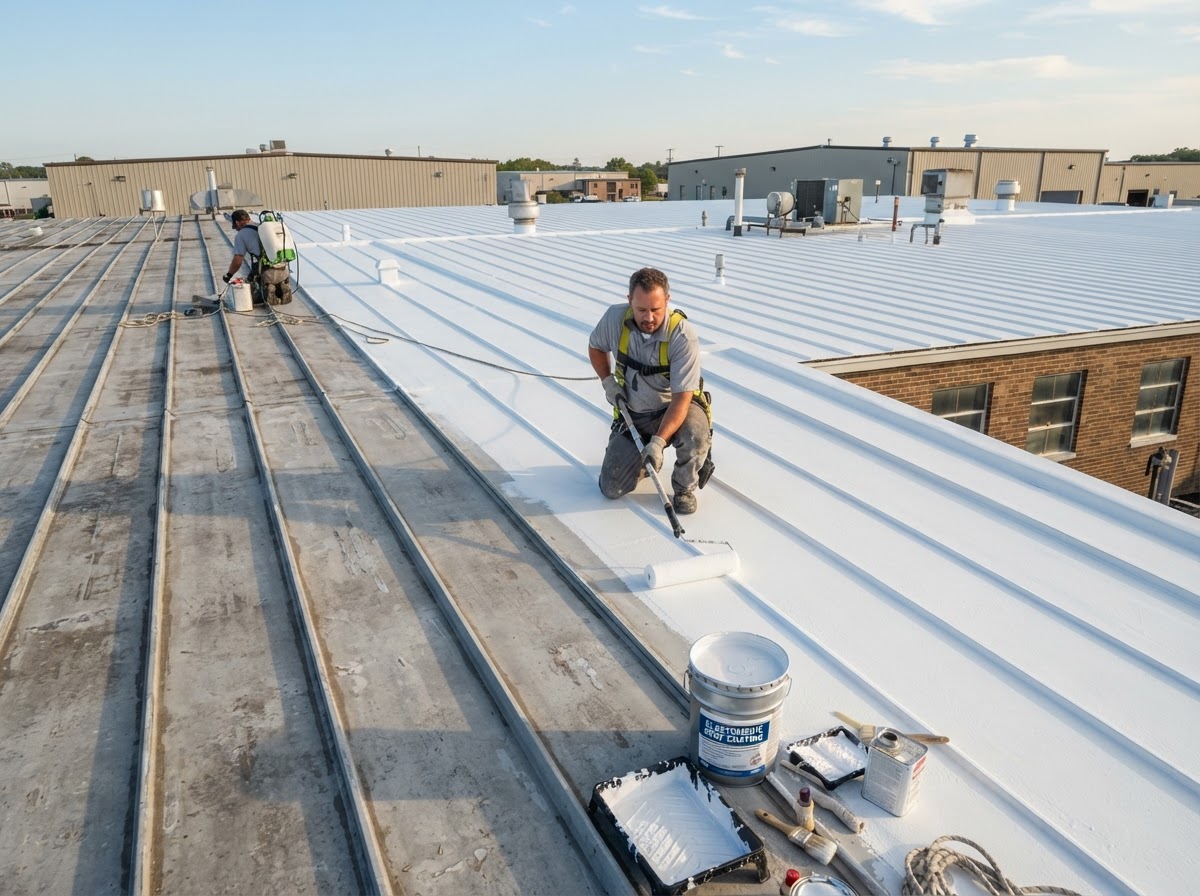
A roof coating can extend the life of a metal roof whose panels are still sound but whose surface is aging — restoring reflectivity, sealing seams and fasteners, and adding a waterproofing layer without removing the existing roofing. But a coating is not suitable for every roof, and it is not a substitute for correcting structural problems or replacing roofing that has reached the end of its life. This page covers how a metal-building roof is evaluated for coating on a Montgomery-area property and what the options and limitations are.
Coating Applications
A coating is a surface treatment for a roof that still has structural life left in it. The buildings below are the types where a coating may be worth considering — after an assessment confirms the roof is a suitable candidate.
Barn and farm-building roofs whose panels are sound but whose surface has weathered, with seams and fasteners that benefit from a sealing coat.
Shop roofs where reflectivity and surface protection help manage interior temperature and slow aging of the roofing material.
Storage roofs where a coating seals aging seams and fasteners to extend the roof's service life without the disruption of replacement.
Business-use roofs where a restoration coating can defer replacement and protect the building's operations from roof-surface deterioration.
Roofing systems whose panels are still structurally sound but whose original coating has thinned or chalked, where a compatible coating restores the surface.
Selected roofs where a coating is part of a maintenance plan to extend service life rather than replace roofing that still has years left.
A coating is only as good as the roof it goes on. Suitability depends on the panel condition, the fastener security, the surface preparation the roof will accept, and the compatibility of the coating product with the existing material. A coating does not universally stop every leak — it addresses leaks from surface aging, seams, and fasteners on a sound roof, not leaks from structural failure or corroded-through panels. Where the roof is not a candidate, replacement is the honest answer rather than a coating that will not perform.
Coating Preparation
Preparing a roof for coating is where the coating succeeds or fails. The assessment works through the roof and its surface before any product goes on.
Determine the roof material and the panel profile, since the coating product has to be compatible with what is already there.
Assess the overall condition of the roof — whether the panels are structurally sound enough to accept a coating or need repair first.
Determine whether corrosion is surface-level and treatable or has thinned the steel past the point where coating is appropriate.
Verify that fasteners are secure and sealed, or identify the resealing needed before a coating can perform over them.
Look at the panel seams and the roof penetrations where a coating membrane needs to bridge and seal the vulnerable joints.
Check that the roof drains properly — ponding water undermines a coating and should be addressed before application.
Determine whether an existing coating is present and compatible, or needs removal, before a new system is applied over it.
Match the coating product to the roof material, the slope, and the condition so the system adheres and performs as intended.
Clean, treat corrosion, reseal fasteners, and prime the roof to the product's requirements so the coating bonds to a sound surface.
Confirm the application conditions and requirements for the specific coating product, following the manufacturer's specifications.
Surface condition and product compatibility are what determine whether a coating performs or fails. No unsupported application thicknesses, temperatures, coverage rates, or curing schedules are published here — those follow the manufacturer's specifications for the specific coating product and the actual roof.
Coating Systems & Limitations
The coating systems below are the types used on suitable metal roofs. Each has its own preparation, compatibility, and performance characteristics — and none is a substitute for structural repair or replacement.
Flexible, membrane-forming coatings that stretch with roof movement and seal seams and fasteners under a continuous surface layer.
Water-based coatings suited to certain roof slopes and conditions, offering reflectivity and surface protection where the product is compatible.
Moisture-resistant coatings that perform where ponding water is a concern, suited to specific roof conditions where the product is appropriate.
Other suitable coating products selected for the roof material, slope, and condition rather than chosen by price or brand alone.
Primers that promote adhesion between the existing roof and the coating, applied where the product and the surface call for them.
Rust treatment and priming of surface corrosion before coating, so the coating does not trap active rust underneath.
Reinforcement and detailing at seams, penetrations, and fasteners where the coating membrane needs to bridge the roof's joints.
Confirming the roof drains and planning the periodic inspection that keeps the coating performing through its service life.
Roof Repair
Addresses specific localized defects — a leak, a fastener, a damaged panel — while leaving the rest of the roof in place.
Roof Coating
Adds an appropriate coating system to a suitable existing roof whose panels are sound, restoring the surface and sealing aging seams.
Roof Replacement
Replaces roofing materials that are unsuitable for continued service — failing panels, corroded-through steel, or a roof past its useful life.
Roof Retrofit
A separate roof-system approach installed over an existing roof, requiring compatibility and structural assessment before it is chosen.
A coating does not solve failed structural supports or severely deteriorated roof assemblies. Where the panels or the structure beneath are failing, the roof needs repair or replacement, not a surface coat. The right approach follows the assessment, not a preference for the least work.
Coating Questions
Accurate, restrained answers about what coatings do, when they fit, and what they cannot do.
Request an Assessment
Share the building type, the roof material, the approximate dimensions, any existing coating information, known leaks or corrosion, and photos if available. That is enough to start a useful conversation about whether the roof is a coating candidate and what the preparation and options would involve.
No telephone number is listed until a verified contact number is supplied and approved for public display. Email is the fastest way to start a project conversation.
Related topics — warehouse roof coatings and commercial roof retrofit systems — have their own pages as the site is built out.
Montgomery Pole Barn Builders & Metal Building Construction