Metal Roof Panels
Dented, creased, lifted, or peeled roof panels from wind and hail — the most common and most visible storm damage on a metal roof.
Storm Damage Repair
A storm can leave a metal building with dented roof panels, torn flashing, damaged doors, or — in harder-to-see cases — framing or anchoring that shifted under the load. The work that follows starts with an assessment that tells surface damage from structural concern. This page covers storm damage repair for a barn, garage, shop, or steel building on a Montgomery-area property, from the assessment that guides the scope to the repairs, the replacement, and the considerations that follow severe weather.
What a Storm Can Affect
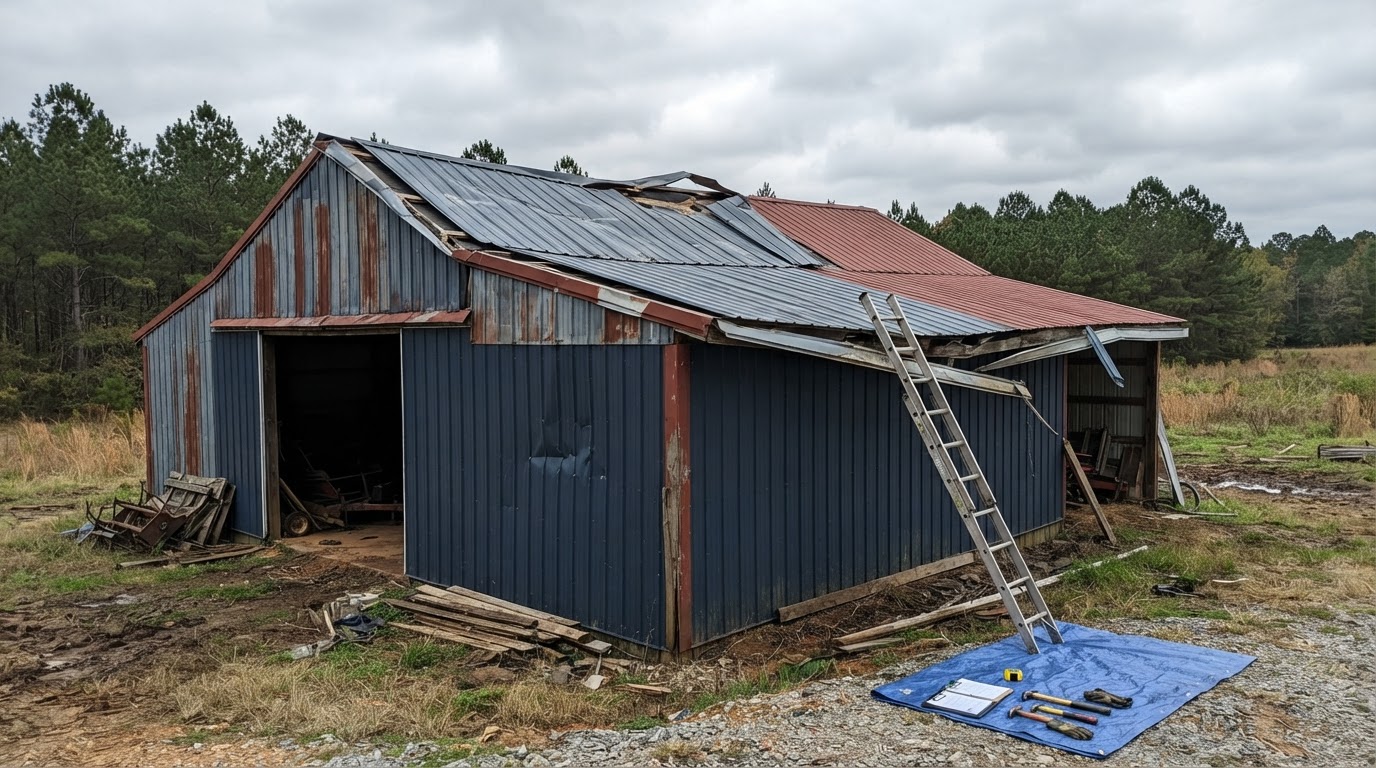
A metal building is built to take a lot of weather, but a bad storm can reach it in several places at once. The damage below is what an assessment looks for, because the visible part and the part worth concern are not always the same.
Dented, creased, lifted, or peeled roof panels from wind and hail — the most common and most visible storm damage on a metal roof.
Impact-creased or displaced wall steel from wind-blown debris, with damage that can range from a dimple to a puncture.
Torn or lifted flashing at the ridge, eaves, valleys, and penetrations, where wind-driven rain finds its way in.
Loosened, backed-out, or pulled fasteners that no longer hold the panels down and no longer seal against water.
Overhead, walk-through, and sliding doors knocked out of alignment, dented, or unable to open and close as they should.
Bent or displaced rake, eave, and corner trim that breaks the building envelope and lets wind and water past the steel.
Dented, detached, or misaligned gutters and downspouts that no longer carry roof runoff away from the building.
Posts, anchors, or base connections that shifted under wind load — a structural concern rather than a cosmetic one.
Bent, shifted, or displaced trusses, posts, or columns that may have taken load the steel above them did not show.
Lean-tos and extensions that took wind load independently of the main building and may have separated or shifted at the connection.
A dented panel is easy to see; what it might mean for the structure beneath is not. The point of an assessment is to separate the two — the visible damage a storm leaves on the steel from the possible concealed concern in the framing, the connections, and the anchoring that carried the same load. Not every damaged panel indicates major structural failure, and not every sound-looking surface means the structure beneath is fine. The assessment is what tells the two apart, and the repair scope follows that rather than the most visible dent.
Damage Assessment
A storm assessment works through the building from the envelope to the structure in order, so the repair scope reflects what the storm actually did rather than what is most visible.
Start with the building type — post-frame, tubular-frame, or red-iron — because it sets how the building carries load and where storm damage shows up.
Walk the building and record the visible damage to the roof, the walls, the doors, and the trim before going deeper.
Assess the panels for dents, creases, punctures, lifting, and peeling, and note which can be repaired and which need replacement.
Check overhead, walk-through, and sliding doors for alignment, operation, and damage that affects access and security.
Look for signs that the storm opened the envelope and let water in — stains, wet insulation, or moisture behind the steel.
Evaluate the fasteners, clips, and connections for loosening, backing out, or failure that weakens how the steel is held down.
Where warranted, check the trusses, posts, columns, and bracing for bending, shifting, or damage beneath the visible steel.
Review the foundation, posts, and anchoring for displacement or movement that could indicate the structure shifted.
Determine which components repair, which replace, and where a broader roof or structure replacement is the more reliable answer.
Confirm where the scope requires qualified professional assessment and where the applicable approvals and inspections apply.
An unstable or potentially unsafe structure should not be entered or accessed until a qualified person has determined it is safe to approach. The area beneath a damaged roof or against a shifted wall is not a place to stand until that is confirmed. No do-it-yourself structural repair instructions are provided here — storm damage work is performed by qualified people with the right access and equipment, and the assessment comes before any repair is planned.
Repair Options & Limitations
The repairs below are the categories an assessment may land on. Which apply, and how much each one covers, follows the actual damage and the structure beneath it — not a default.
Replacing individual or groups of roof and wall panels that were dented, creased, or punctured, where the framing beneath is sound.
Localized roof repairs — resealing, re-fastening, or correcting flashing — for damage confined to specific areas of an otherwise sound roof.
Repairing or replacing torn and lifted flashing at the ridge, eaves, valleys, and penetrations where the storm broke the seal.
Replacing overhead, walk-through, or sliding doors that were dented or knocked out of alignment and no longer operate as they should.
Re-securing, resealing, or replacing dented and detached gutters and downspouts so roof runoff is controlled again.
Reviewing and re-securing the fasteners, clips, and connections that hold the steel down, where the storm loosened or pulled them.
Restoring the roof and wall envelope so wind-driven rain and debris can no longer get past the steel where the storm opened it.
Where properly designed, repairing or replacing bent or shifted framing, trusses, posts, or anchoring that took storm load.
Replacing components that cannot be safely repaired — where the damage is too severe or the part too compromised to put back in service.
Where the roof is sound after repair, a compatible coating may extend its life — but only after the underlying damage is corrected, not as a substitute for it.
The actual scope depends on the damage, the structural condition, and a qualified assessment — no full restoration is promised without that inspection. Insurance coverage and approval are not assumed; both depend on the actual policy, the documented loss, and the insurer's determination, which is best taken to the carrier with the damage documented rather than assumed here.
Storm Damage Questions
Careful answers about assessment, repair versus replacement, water intrusion, and insurance.
Request a Quote
Share the building type, the property location, a description of the damage, the approximate structure size, any photos you have, and any immediate safety concerns. That is enough to start a useful conversation about the assessment, the repair options, and the next steps.
No telephone number is listed until a verified contact number is supplied and approved for public display. Email is the fastest way to start a project conversation.
Related topics — storm-damaged carport replacement — have their own pages as the site is built out.
Montgomery Pole Barn Builders & Metal Building Construction